
Why the Youth Don't Fear AI (And Why That Changes Everything)
Blog post description.
RETICULAR ACTIVATING SYSTEMCLEAR THINKING FOR BUSINESSINTUITIVE DECISION MAKINGNEURAL FILTERSOFTWARE AFFILIATE PROGRAMS#AIWEALTHTRANSFER#MAKEMONEYONLINEMONEY MANAGEMENT FOR BEGINNERSPERSONAL FINANCE GUIDESUBCONSCIOUS PROGRAMMINGAFFILIATE MARKETINGREDUCE FINANCIAL STRESSWEALTH TRANSFER STRATEGIESAFFILIATE MINDSET
5/3/20269 min read
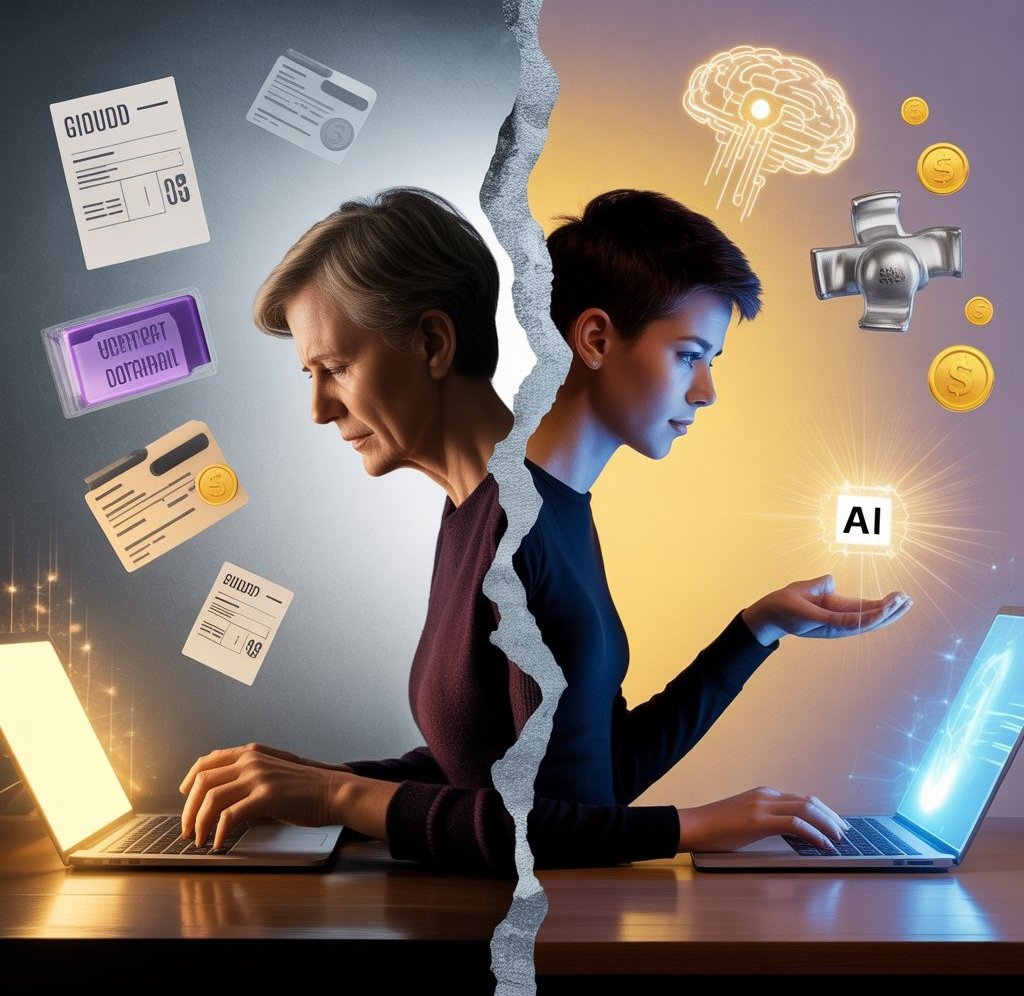
Why the Youth Don't Fear AI (And Why That Changes Everything)
They Were Literally Born Into It
Here is something most adults do not understand about the younger generation.
They were not "introduced" to AI as adults the way we were. They did not have to learn it. They did not have to overcome fear of it. They did not have to be convinced it was safe.
They grew up with it. From infancy.
Let me explain what that actually means.
The New Reality of Childhood
CTA #1: The "Stop Watching Your Kids Pass You" Hook
Consequence: While you hesitate, your children and grandchildren are using AI to build wealth, automate income, and scale businesses. They aren't waiting for permission. They aren't afraid of "getting it wrong." And every day you stay stuck in old thinking, the gap between you and them grows wider.
Solution: The Dreamscape Signature Ecosystem clears the fear programming from your brain — the same fear that keeps you watching while the youth capture the $17 trillion wealth transfer.
👉 Clear your fear. Then claim your share. Start with Dreamscape Signature.
Today, AI is woven into the fabric of growing up in ways most adults cannot imagine. Primary school children increasingly use AI for composing essays, completing homework, and addressing various inquiries related to school subjects . This is not an exception. This is the norm.
Toys that once shaped childhood—LEGO bricks, coloring books, toy cars, dolls, stuffed animals—are now being replaced by AI-based toys that offer endless possibilities for interaction and two-way communication . The market for AI toys is expanding rapidly. China currently has over 1,500 companies involved in AI toys. A search on Amazon yields over 1,000 AI toy products .
Even the big brands are moving. OpenAI recently signed a strategic collaboration with Mattel—the company behind some of the most iconic toys in history—to support AI-driven products and experiences .
Think about that. Children today are having conversations with their toys. Their toys listen. Their toys respond. Their toys adapt.
The Numbers That Prove the Generational Gap
The data is staggering. A UNICEF report found that 67% of teenagers in the United Kingdom now use AI—a number that has nearly doubled in just two years . Thirty-nine percent of American elementary students learn through AI applications. In Argentina, 37% of children aged 9-11 use ChatGPT to get information .
Nearly three-quarters (74%) of schools now have policies regarding AI and academic work—a 23-point increase from the previous year . AI is not coming to education. It is already there.
Children are even mentioning AI in their own creative writing. Analysis of over 46,500 stories submitted by children aged five to 11 found that mentions of AI increased 50% in just one year . Children are personifying AI in their stories. They are writing about it as naturally as previous generations wrote about their pets or their favorite toys.
The Key Difference: No Fear, Just Fluency
Here is what this means in practical terms.
When an adult encounters a new AI tool, their first reaction is often hesitation. "Is this safe? Will it take my job? Am I tech-savvy enough to figure this out?"
When a young person encounters a new AI tool, their first reaction is curiosity. They try it. They push its limits. They figure out what it can do—not because they are "smarter," but because they have been trained since birth to interact with responsive, intelligent technology.
Children today are forming parasocial relationships with interactive media characters powered by AI . They have been having conversations with screens since they were toddlers. The fourth wall never existed for them the way it did for us.
A child's brain is still developing during these formative years. Every experience builds a million new neural connections . When those experiences include AI interaction as a normal, expected part of daily life, the brain wires itself to be fluent in AI the way previous generations were fluent in reading or arithmetic.
CTA #2: The "Your 401k Is Not Enough" Hook
Consequence: The average retirement account for someone 55-64 is only 120,000.Spreadover20years,thatis120,000.Spreadover20years,thatis500 per month. You need 3,000−3,000−5,000 per month to live comfortably. The math does not work. And waiting will not fix it.
Solution: The AI Affiliate Marketing 90-Day Launchpad Ecosystem gives you the exact blueprint to build AI-powered passive income streams — so you can supplement your retirement savings with real, automated income.
👉 Stop hoping. Start building. Join the 90-Day Launchpad ($1,497)
But Here Is the Twist: They Are Not Naïve
Here is what surprised me when I researched this.
Young people are not blindly optimistic about AI. In fact, their attitudes are souring. A recent survey found that the percentage of young people who feel hopeful about AI dropped from 27% to 18% in just one year. Excitement dropped too. Nearly a third now say AI makes them feel angry .
Why? Because they see the risks more clearly than we do. They are the ones competing for entry-level jobs that AI might replace. They are the ones worrying that over-reliance on AI will make learning harder—80% of Gen Z workers believe this .
Fifty-seven percent of kids believe AI will help society in the long run, but their parents are more evenly split—ambivalent, cautious, uncertain . The kids are more optimistic, but also more aware of the downsides.
And despite their concerns, nearly half (48%) of high school students predict they will need to know how to use AI in their future careers . They are not rejecting AI. They are preparing for a world where AI literacy is as fundamental as reading.
The Workplace Advantage That Adults Cannot Ignore
Here is the data that should concern every adult reading this.
The 2026 Research Report on generational conflict in the workplace found that 88% of Gen Z workers say they always or often hit their revenue targets, compared with only 78% of Baby Boomers .
That is not because Gen Z works harder. It is because they use AI as a natural extension of their workflow. They do not resist it. They do not fear it. They just use it.
But here is the cost of that divide. Uneven AI adoption is costing U.S. employers an estimated $56 billion per year in lost productivity . Generational conflict—much of it centered on technology adoption—is costing organizations an average of 5.3 hours per employee per week.
Sixty-four percent of Gen Z workers say Boomer resistance to technology is killing innovation. Sixty-three percent say it is costing them deals .
This is not a theory. This is happening right now.
What This Means for You
If you are over 40, over 50, over 60, you have a choice.
You can resist AI like your generation is statistically more likely to do, citing concerns about safety, ethics, and job security. You can continue to feel anxious, angry, and left behind.
Or you can recognize that the young people who are capturing the $17 trillion wealth transfer have one advantage you do not—not intelligence, not work ethic, not luck. Just familiarity.
They have been training for this moment since they were toddlers. You have to train now.
CTA #3: The "The Youth Are Capturing Your Wealth" Hook
Consequence: Over 1,000 people under 30 in the UK earned over £1 million in a single year — an 11% increase. They are using AI tools that did not exist 10 years ago. While you hesitate, they capture the $17 trillion wealth transfer that should have been for your generation.
Solution: The YTA Automation Economic Warfare Edition helps you build faceless YouTube channels that generate passive income — the same strategy the youth use, but tailored for adults who don't want to be on camera.
👉 Stop watching. Start winning. Get YTA Automation
The Good News: It Is Not Too Late
Here is what the research also shows. Baby Boomers are actually an enthusiastic cohort of AI users when they engage with it . They show high levels of engagement with chatbots' conversational ability. The capacity to learn is there.
The question is not "can you learn AI?" It is "will you?"
The youth are not waiting. The wealth transfer is not waiting. The window is open, but it will not stay open forever.
You can stay stuck in fear. Or you can start training now.
The choice is yours. But the clock is ticking. 👑💜🔥
📊 The Key Statistics
already74% of schools now have AI policiesAI is already embedded in education
📊 The Generational AI Divide: Facts You Cannot Ignore
Here is the data laid out clearly so you can see the gap.
Statistic What It Means For You? 67% of UK teenagers use AI — nearly doubled in just 2 years.
Your grandchildren are already fluent. They do not fear AI. They do not hesitate. They just use it.
88% of Gen Z hit their revenue targets — compared to only 78% of Baby Boomers.
AI gives a measurable workplace edge. The generation that uses AI wins more often. Period.
$56 billion annual productivity loss from generational AI divide in U.S. workplaces.
This is not a small problem. It is costing the economy billions because one generation refuses to adapt.
48% of high school students say they will need to know how to use AI for their future careers.
Your kids and grandkids already know this. They are preparing. Are you?
74% of schools now have policies regarding AI and academic workAI is already embedded in education. It is not coming. It is already here.
The "Complete Sovereignty" Hook
Consequence: If you only learn AI tools but do not clear the fear from your brain, you will self-sabotage right before success. If you only clear your brain but do not learn the tools, you will have clarity without action. You need both.
Solution: The Echelon Thesis combines Dreamscape Signature (neural clarity) + YTA Automation (content engine) + AI Affiliate Toolkit (8 tools). Total sovereignty. Total freedom.
👉 Clear your brain. Build your empire. Get the Echelon Thesis
📈 The Bottom Line
Generation AI Adoption Results Gen Z High — grew up with AI. Hit revenue targets 88% of the time versus Baby Boomers Lower — higher resistance. Hit revenue targets 78% of the time
The gap is 10 percentage points.
That is not because one generation is smarter or works harder. It is because one generation uses AI as a natural part of their workflow. The other generation hesitates.
⚠️ The Cost of Waiting
If You Stay Stuck. If You Adapt Now. You lose $56 billion in productivity (collectively). You close the 10-point gap. You watch younger workers pass you. You compete on equal footing. You remain in the 78%. You join the 88%.
The window is still open. But it will not stay open forever.
👑 Your Takeaway
The data is clear. The gap is real. The cost of waiting is measurable.
You cannot change when you were born. You cannot change that you were not exposed to AI as a child.
But you can change what you do today.
Start now. The youth are not waiting. Neither should you. 👑📊🔥
Use this post as a wake-up call for your audience, Queen. The fear is understandable. The refusal to adapt is not. 👑📈🔥
CTA #5: The "You Have Time — But Not Forever" Hook
Consequence: The $17 trillion wealth transfer is still happening. The window is still open. AI tools are still accessible. But every day you wait, someone else claims your share. The youth are not waiting. The early adopters are not hesitating. Neither should you.
Solution: The **AI Affiliate Launch 90-Day Ecosystem ∗∗includes a FREE $2197∗∗ AI Affiliate Toolkit — the same tools millionaire gurus use. This is a no-brainer. You get the ecosystem for free when you upgrade.
👉 The window is still open. Walk through. Get the 90-Day Launchpad ($1,497) + FREE Toolkit
2026 Ladye Queen. All Rights Reserved.
Privacy Policy | Terms of Use | Affiliate Disclosure
👑 For NetWealthEnterprise.com Specifically
📧 Contact: [support@netwealthtrends.com]
Follow Me: @GAMS on YouTube | @GuardianAngelMusic | Blogger
© 2026 Ladye Queen. All Rights Reserved. | Privacy Policy | Terms of Use | Affiliate Disclosure
The Millionaire Gurus Hide These Tools. I Give Them to You for FREE."
Clarification:
"2,197 Toolkit. $1,497 Investment. You Do the Math."
The AI Affiliate-Tool Kit alone is priced $2,197 on our website. When you invest in the AI Affiliate 90−Day Ecosystem ($1497). You get the AI Affiliate Tool Kit ($2197) for FREE. This Is A No Brainer to purchase! Because the "millionaire gurus" implements these exact software tools but, they refuse to reveal them to you because they want to horde their sales conversion! I am not a guru, therefore I like exposing their secrets. My philiosphy is this $17T Wealth Transfer 2026 is enough money for everyone to get their share. Consequently, I help my customers who purchase a $1497 or higher ecosystem by giving them this bonus AI Affiliate Tool Kit ($2197) to accelerate their jumpstart begining in making money online that negates the learning curve.
This is not a course. It is a complete business system.
This site contains affiliate links. I may earn a commission at no cost to you.
👉 Read my full testimony here.
Ready to clear your own brain and claim your share?
Your Next Step
You do not need to be a tech expert. You do not need to be a marketing guru. You do not need to have an audience already.
You just need to start.
Option 1: Start with YTA Automation Ecosystem and build your faceless YouTube channel.
Option 2: Go all in with the AI Affiliate Launch 90-Day Ecosystem and get the complete 8-tool toolkit for free.
Option 3: Focus on the keto niche with the Keto Turning Cash Ecosystem.
Option 4: Choose the combination ecosystem to erradicate your decades of mental pain to reciprocate your financail gain — The Echelon Thesis Ecosystem which includes Dreamscape Signature Ecosystem, YTA Automation Ecosystem, and the AI Affiliate Tool Kit.
The window is open. The tools are ready. The $17 trillion wealth transfer is happening now.
Do not watch from the sidelines.
To Your Success,
Ladye Queen
This Is An Educational Financial And Health Empowerment Website For Everyone To Get Your AI Wealth In 2025 And Beyond!
Explore our curated selection of affiliate products and educational blogs about financial and health empowerment in this global economic crisis. Google projects AI affiliate sales to reach $17 trillion in 2026 and beyond. Read our blogs, click the links, and start making money online with AI Empowerment programs and AI Mastery Guides.
Join thousands — especially the youth — who have become millionaires in the last year or two.
Adults, do not let the youth take your AI wealth. Social Security is depleting. Your share of the $17 trillion is waiting.
support@netwealthtrends.com
+502.309.9040
© 2024. All rights reserved.